
Four and a Half Years of Transformative Leadership
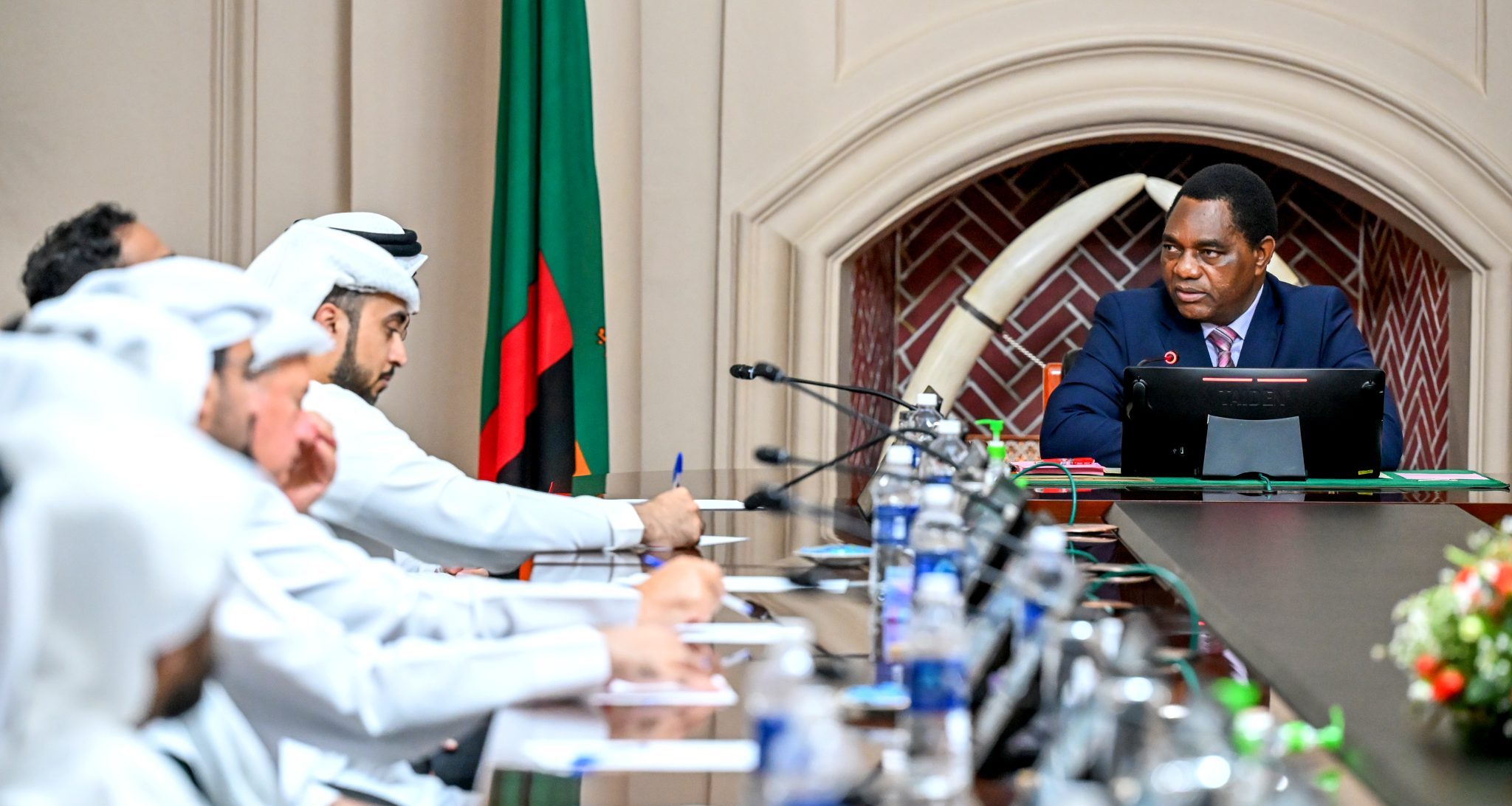
When President Hakainde Hichilema took the helm of the New Dawn Administration in August 2021, Zambia faced a daunting array of challenges: a staggering debt burden, spiraling inflation, rampant load-shedding, and a demoralized citizenry. Four and a half years later, as the nation stands on the cusp of the August 13 general election, the picture has changed profoundly. Through a disciplined mix of fiscal consolidation, strategic investment, and sweeping institutional reforms, Zambia has charted a remarkable path from economic distress to renewed stability and growth. This article provides a comprehensive review of the administration’s achievements across the economy, governance, infrastructure, social protection, agriculture, mining, manufacturing, and foreign relations.
- Economic Revival
- Political Reforms & Good Governance
- Infrastructure and Energy
- Socio‑Economic Transformation
- Agricultural Facelift
- Minning Sector
- Manufacturing and Industrialization
- Foreign Policy and Regional Integration
-
Stabilization, Growth, and Investor Trust
The government’s overriding priority has been economic reconstruction. When President Hichilema assumed office, Zambia’s economy was contracting by –2.8%. Today, real GDP is projected to grow by 6.4% in 2026, driven by a strong recovery in mining, increased agricultural production, and improved electricity supply. The President himself has indicated that the country is looking to over 6.0% GDP growth for the year, underscoring the momentum generated by home-grown economic diplomacy reforms. This turnaround has not gone unnoticed. At the 2026 Africa Mining Indaba, President Hichilema was able to share a remarkable statistic: inflation reduced to single digits from a peak of 22%, and Zambia has completed 38 consecutive months of successful IMF Extended Credit Facility reviews. Speaking to delegates, he emphasized that “we must construct our own recovery programmes and ask the IMF to support us—those programmes should be about growth, not just fiscal consolidation and macro stability”.
A cornerstone of the administration’s success has been the home-grown programme with the IMF under the Extended Credit Facility (ECF). The program was designed to dismantle Zambia’s huge debt overhang, a priority that many initially questioned but which the President stuck to “religiously”. Today, that strategy has paid off. In April 2026, the government reached a deal to restructure over US$6 billion of foreign debt, saving the country an estimated $5.8 billion in debt service obligations ahead of the election. This has created critical fiscal space, allowing the government to move from a purely consolidationary stance toward a more expansionary approach focused on energy, infrastructure, and social investment.
-
Business Environment and Investment
The Hichilema administration has worked diligently to restore investor confidence by prioritizing policy consistency, fiscal discipline, and transparency. The results have been tangible. Since 2021, Zambia has recorded a $14.71 billion increase in trade and investment, with over 91,500 jobs actually created across nearly 800 companies. Manufacturing accounted for the largest share of actualized investments at $5.54 billion, followed closely by mining at $5.07 billion. To further bolster access to long-term financing, the Cabinet recently approved the establishment of a new Development Finance Institution (DFI) to support projects outlined in the National Development Plans, filling the gap left after the dissolution of the Development Bank of Zambia.
-
Decentralization and Constituency Development Fund (CDF)
One of the most transformative political achievements has been the massive expansion of the Constituency Development Fund. The CDF has risen from just K1.6 million per constituency in 2021 to K40 million in 2026, a 25‑fold increase. Speaking at the State of the Nation Address, President Hichilema made clear his intention to increase it further if re‑elected. This unprecedented injection of resources has empowered communities to drive local development—funding secondary school bursaries, skills development programs, and grassroots infrastructure projects. In a historic first, the President convened a special meeting with all 1,832 councillors from across the country, recognizing them as the “government’s foot soldiers who bring development closer to the people at ward level”. At the same time, he stressed accountability: “With greater authority comes even greater accountability,” urging local leaders to uphold integrity and transparency.
-
Constitutional Amendments and Inclusivity
The administration has also pushed through landmark constitutional amendments. Act No. 13 guarantees, for the first time in Zambia’s history, representation for women, youth, and persons with disabilities at all levels of the governance system. President Hichilema hailed the amendment as a move that “strengthened the country’s democracy and promoted inclusivity in the governance system”. In addition, the government has created 70 new constituencies, raising the total from 156 to 226. While the move has sparked political debate, it carries a significant development dimension: each new constituency receives K40 million in annual CDF funding, delivering an extra K2.8 billion for localized projects such as schools, clinics, and community empowerment initiatives.
-
Rule of Law and Anti-Corruption
The President has consistently framed the fight against corruption as a moral and economic imperative. The government has carried out the largest-ever asset recovery from corruption, signaling that impunity for high-level graft is no longer tolerated. In a bold move, President Hichilema also fired the entire board of the Anti-Corruption Commission after its own members were accused of misconduct, underscoring that no institution is above scrutiny. While challenges remain, the administration has made measurable progress in restoring integrity to public procurement, utilization of resources, and regulatory oversight.
-
Energy Sector Reforms and Generation Targets
Load‑shedding, once a crippling feature of daily life, has been drastically reduced thanks to deliberate energy sector reforms. The government accelerated reforms to reduce reliance on hydropower, opening up electricity generation and trading to greater private sector participation, and promoting diversification through solar and coal‑fired power projects. Zambia now aims to scale up power generation from the current 3,500 megawatts to 10,000 megawatts, with a diversified mix that includes hydro, solar, and clean thermal power. Private investment is already flowing. The Cooma Solar Project, a 50‑megawatt facility with battery storage, created about 1,500 jobs during construction and is expected to generate 150 permanent jobs, demonstrating how energy investments can directly contribute to employment. The government is also working to restructure ZESCO Limited to improve its financial viability and enhance its transmission and distribution capacity.
-
Major Infrastructure Projects
Infrastructure development has been a hallmark of the New Dawn Administration. In February 2026, President Hichilema jointly launched the Kazungula Bridge Authority with his Botswana counterpart, harmonizing customs and immigration procedures to ensure the seamless movement of people and goods across a critical regional artery. In March 2026, he commissioned the upgraded Nakonde One Stop Border Post, a facility that handles roughly 20% of Zambia’s trade. The President noted that the improved efficiency will increase government revenue, directly supporting social programs such as free education, teacher recruitment, and water and sanitation. The upgrade, which includes an advanced scanner and improved roads, reduces truck scanning time from 25–30 minutes to a fraction of that, unlocking long‑dormant trade potential. Plans are also underway to build ships on Lake Tanganyika and to open two new mines in Muchinga Province, alongside the construction of an airport in Nakonde.
-
Free Education: A Generational Shift
Perhaps the single most impactful policy of the Hichilema administration has been the introduction of free education. Over 2.5 million children who had previously dropped out due to financial barriers have now returned to school, supported by the recruitment of nearly 42,000 new teachers. The Grade 12 pass rate has reached a record 70 percent, a clear indicator that the reforms are bearing fruit. To make this transformation irreversible, Cabinet has approved a proposal to enshrine free education in law, preventing any future administration from arbitrarily reversing the policy. The school feeding program now benefits about four million learners nationwide, simultaneously providing a stable market for local farmers. President Hichilema’s vision is clear: “Free education is not just school fees removed but also examination fees. What’s the point of teaching a child for a full year who can’t sit for exams because they can’t pay their exam fees?”
-
Healthcare Expansion and Self‑Reliance
The health sector has seen major investments. Over 18,000 health workers have been recruited since 2021. In a recent tour of Mooya Health Post in Monze District—a facility initially built by the President’s family using personal resources before he entered public office—President Hichilema pledged to upgrade it to a Level One Hospital with a mortuary and modern medical equipment, serving a catchment population of over 5,000 people. On the continental stage, the President launched ACHIEVE Africa, a five‑year, US$100+ million initiative to accelerate Africa’s end‑to‑end vaccine and biologics R&D ecosystem. Speaking at the launch, he called for “decisive action to end Africa’s dependence on external vaccines and medicines,” framing health sovereignty as critical to development and human security.
-
Social Protection and Cash Transfers
The government has expanded social protection to reach more vulnerable households than ever before. The Social Cash Transfer value has been doubled—from K200 to K400 per month for general households, and from K400 to K600 for households with a member living with a disability. The number of beneficiary households has increased from 1.3 million to 1.5 million nationwide. Under the Food Security Pack Programme, the number of vulnerable but viable farmers supported has risen from 240,000 to 320,000 beneficiaries. Additionally, 4.9 million citizens now have access to clean water, a foundational requirement for health and dignity.
-
Record High Harvests and Ambitious Targets
Agriculture has been a standout success. The 2025 farming season delivered a record harvest of over 3.7 million metric tonnes of maize, shattering previous records and positioning Zambia as a net exporter of grain. President Hichilema has challenged farmers to aim even higher: 10 million tonnes of maize, 1 million tonnes of wheat, and 1 million tonnes of soybean, a vision that would firmly establish Zambia as the food basket of the region. To achieve this, the government has approved a 24-hour economy to boost productivity and is pushing legislation for stiffer punishments for sellers of fake agricultural products, reclassifying agriculture and livestock as economic assets to be protected under the Economic and Financial Crimes Court.
-
Livestock Development and Export Potential
The livestock sector has emerged as a pivotal area for economic diversification. President Hichilema has set a target of unlocking $1 billion in livestock exports by 2026. To achieve this, measures are being implemented to reduce animal mortality from 12.5% to 5%, improve calving rates from 29% to 40%, and increase pasture and fodder availability. The goal is not only about foreign exchange earnings but also about creating thousands of jobs and uplifting rural communities. The 2026 Budget allocated K151.5 million towards livestock development, covering disease control, breeding programs, and market expansion.
-
Farmer Protection and Market Access
President Hichilema has consistently defended farmers against exploitation. He has expressed concern over unscrupulous buyers offering unfair prices for produce while still in the field, and has appealed to farmers to wait for the Food Reserve Agency (FRA) to purchase their produce at fair prices. At the same time, the government is working hard to ensure farmers have access to markets, including exports to the Democratic Republic of Congo. The school feeding programme has also been structured to provide a dependable market for local farmers, creating a virtuous cycle of production and consumption.
-
Copper Production and Investment Inflows
Mining has been central to the administration’s economic revival. By providing regulatory certainty, transparent institutions, and the deployment of game-changing technologies, the government has attracted over $12 billion in new foreign investment since 2022, predominantly in mining. Copper production reached 890,346 metric tonnes in 2025, an 8% increase from 2024 and the country’s highest in years. The administration has set a target of 1 million metric tonnes of copper in 2026, and a medium‑term goal of 3 million tonnes per year. Brownfield operations such as First Quantum Minerals, Lumwana, and Mopani, alongside greenfield developments, are driving this growth.
-
Reviving Dormant Assets
Perhaps the most symbolic achievement has been the revival of long‑dormant mining assets. The Kalengwa Mine in North‑Western Province, which had been out of operation for approximately 47 years, has recently returned to production following policy adjustments and efforts to restore operational viability. The reopening of the historic Mulungushi Textiles Plant in Kabwe (see below) has also been facilitated by the same investor-friendly climate. President Hichilema has also announced plans to open two new mines in Muchinga Province (Isoka and Mpika Districts), ensuring that development reaches every corner of the country.
-
Global Leadership and Partnerships
At the 2026 Investing in African Mining Indaba, President Hichilema delivered the keynote address, sharing Zambia’s economic turnaround story as evidence that “disciplined reform and genuine partnership can deliver transformative results”. He called for African nations to “change the narrative” regarding international financial institutions, urging them to construct their own recovery programmes and ask the IMF for support—an approach that has clearly worked for Zambia. The response has been strong: ZCCM‑IH Board Chairperson Phesto Musonda noted that the President’s address “sparked significant interest from the global investment community,” with Zambia anticipating new partnerships to be announced in the coming weeks.
-
Reopening Mulungushi Textiles
In a powerful symbol of industrial revival, President Hichilema officially reopened the Zambia–China Mulungushi Textiles Plant in Kabwe in April 2026. The plant, which ceased operations in 2007, has been equipped with modern machinery worth millions of dollars and is expected to manufacture a range of products including cotton fabrics, chitenge materials, curtains, and other textile goods, creating more than 500 direct jobs and strengthening cotton out‑grower systems. Minister of Commerce Chipoka Mulenga described the reopening as a direct outcome of “deliberate policy direction and sustained leadership,” noting that “today, government has done what previous administrations could not achieve”.
-
Industrialization Roadmap and Diversification
The Ministry of Commerce, Trade and Industry, in collaboration with UNCTAD, has launched a Rapid Assessment Report on Value Addition and Diversification that identifies 412 potential diversification products across 25 sectors, including 73 products directly linked to critical energy transition mineral (CETM) value chains. The report provides evidence‑based pathways to move beyond raw commodity exports and build a resilient, diversified economy. President Hichilema has been unequivocal: “We cannot continue exporting raw materials for centuries,” he told delegates at an African manufacturing forum, calling on African governments and businesses to build industries that process resources locally and create employment. Manufacturing has already accounted for the largest share of actualized investments (USD 5.54 billion), and the government is committed to maintaining policy consistency, predictability, and transparency to sustain this growth.
-
Economic Diplomacy and Bilateral Relations
President Hichilema has placed economic diplomacy at the heart of Zambia’s foreign policy. He has emphasized that increased trade and investment are the pathways to benefiting ordinary Zambians, and the results are evident. Zambia has deepened relations with key partners. In February 2026, Ghanaian President John Dramani Mahama paid a state visit to Zambia, resulting in an agreement to establish an enhanced economic development cooperation partnership and a visa exemption agreement to facilitate travel and business. President Hichilema also hosted the EU and other diplomatic partners, focusing on economic growth, peace, and security. Zambia was appointed as the incoming Chairperson of the Southern African Development Community (SADC) , reflecting the country’s constructive regional engagement.
-
AfCFTA and Continental Leadership
Under President Hichilema’s leadership, Zambia has actively embraced the African Continental Free Trade Area (AfCFTA) as a platform for expanding exports and attracting investment. The government has worked to dismantle barriers that historically stifled trade, and at the 2026 Zambia–Ghana Business Forum, concrete steps were taken to operationalize the AfCFTA framework. President Hichilema has also called for the development of shared value chains around logistics and beneficiation, moving beyond the traditional “pit‑to‑port” model. His message to African nations has been consistent: “We are stronger together. We all have capabilities, endowments, skills, and experience. But no single one of us has enough to deliver the total package for our economies”.
President Hakainde Hichilema
Four and a Half Years of Transformative Leadership
When President Hakainde Hichilema took the helm of the New Dawn Administration in August 2021, Zambia faced a daunting array of challenges: a staggering debt burden, spiraling inflation, rampant load-shedding, and a demoralized citizenry. Four and a half years later, as the nation stands on the cusp of the August 13 general election, the picture has changed profoundly. Through a disciplined mix of fiscal consolidation, strategic investment, and sweeping institutional reforms, Zambia has charted a remarkable path from economic distress to renewed stability and growth. This article provides a comprehensive review of the administration’s achievements across the economy, governance, infrastructure, social protection, agriculture, mining, manufacturing, and foreign relations.
- Economic Revival
- Political Reforms & Good Governance
- Infrastructure and Energy
- Socio‑Economic Transformation
- Agricultural Facelift
- Minning Sector
- Manufacturing and Industrialization
- Foreign Policy and Regional Integration
Stabilization, Growth, and Investor Trust
The government’s overriding priority has been economic reconstruction. When President Hichilema assumed office, Zambia’s economy was contracting by –2.8%. Today, real GDP is projected to grow by 6.4% in 2026, driven by a strong recovery in mining, increased agricultural production, and improved electricity supply. The President himself has indicated that the country is looking to over 6.0% GDP growth for the year, underscoring the momentum generated by home-grown economic diplomacy reforms. This turnaround has not gone unnoticed. At the 2026 Africa Mining Indaba, President Hichilema was able to share a remarkable statistic: inflation reduced to single digits from a peak of 22%, and Zambia has completed 38 consecutive months of successful IMF Extended Credit Facility reviews. Speaking to delegates, he emphasized that “we must construct our own recovery programmes and ask the IMF to support us—those programmes should be about growth, not just fiscal consolidation and macro stability”.
A cornerstone of the administration’s success has been the home-grown programme with the IMF under the Extended Credit Facility (ECF). The program was designed to dismantle Zambia’s huge debt overhang, a priority that many initially questioned but which the President stuck to “religiously”. Today, that strategy has paid off. In April 2026, the government reached a deal to restructure over US$6 billion of foreign debt, saving the country an estimated $5.8 billion in debt service obligations ahead of the election. This has created critical fiscal space, allowing the government to move from a purely consolidationary stance toward a more expansionary approach focused on energy, infrastructure, and social investment.
Business Environment and Investment
The Hichilema administration has worked diligently to restore investor confidence by prioritizing policy consistency, fiscal discipline, and transparency. The results have been tangible. Since 2021, Zambia has recorded a $14.71 billion increase in trade and investment, with over 91,500 jobs actually created across nearly 800 companies. Manufacturing accounted for the largest share of actualized investments at $5.54 billion, followed closely by mining at $5.07 billion. To further bolster access to long-term financing, the Cabinet recently approved the establishment of a new Development Finance Institution (DFI) to support projects outlined in the National Development Plans, filling the gap left after the dissolution of the Development Bank of Zambia.
Decentralization and Constituency Development Fund (CDF)
One of the most transformative political achievements has been the massive expansion of the Constituency Development Fund. The CDF has risen from just K1.6 million per constituency in 2021 to K40 million in 2026, a 25‑fold increase. Speaking at the State of the Nation Address, President Hichilema made clear his intention to increase it further if re‑elected. This unprecedented injection of resources has empowered communities to drive local development—funding secondary school bursaries, skills development programs, and grassroots infrastructure projects. In a historic first, the President convened a special meeting with all 1,832 councillors from across the country, recognizing them as the “government’s foot soldiers who bring development closer to the people at ward level”. At the same time, he stressed accountability: “With greater authority comes even greater accountability,” urging local leaders to uphold integrity and transparency.
Constitutional Amendments and Inclusivity
The administration has also pushed through landmark constitutional amendments. Act No. 13 guarantees, for the first time in Zambia’s history, representation for women, youth, and persons with disabilities at all levels of the governance system. President Hichilema hailed the amendment as a move that “strengthened the country’s democracy and promoted inclusivity in the governance system”. In addition, the government has created 70 new constituencies, raising the total from 156 to 226. While the move has sparked political debate, it carries a significant development dimension: each new constituency receives K40 million in annual CDF funding, delivering an extra K2.8 billion for localized projects such as schools, clinics, and community empowerment initiatives.
Rule of Law and Anti-Corruption
The President has consistently framed the fight against corruption as a moral and economic imperative. The government has carried out the largest-ever asset recovery from corruption, signaling that impunity for high-level graft is no longer tolerated. In a bold move, President Hichilema also fired the entire board of the Anti-Corruption Commission after its own members were accused of misconduct, underscoring that no institution is above scrutiny. While challenges remain, the administration has made measurable progress in restoring integrity to public procurement, utilization of resources, and regulatory oversight.
Energy Sector Reforms and Generation Targets
Load‑shedding, once a crippling feature of daily life, has been drastically reduced thanks to deliberate energy sector reforms. The government accelerated reforms to reduce reliance on hydropower, opening up electricity generation and trading to greater private sector participation, and promoting diversification through solar and coal‑fired power projects. Zambia now aims to scale up power generation from the current 3,500 megawatts to 10,000 megawatts, with a diversified mix that includes hydro, solar, and clean thermal power. Private investment is already flowing. The Cooma Solar Project, a 50‑megawatt facility with battery storage, created about 1,500 jobs during construction and is expected to generate 150 permanent jobs, demonstrating how energy investments can directly contribute to employment. The government is also working to restructure ZESCO Limited to improve its financial viability and enhance its transmission and distribution capacity.
Major Infrastructure Projects
Infrastructure development has been a hallmark of the New Dawn Administration. In February 2026, President Hichilema jointly launched the Kazungula Bridge Authority with his Botswana counterpart, harmonizing customs and immigration procedures to ensure the seamless movement of people and goods across a critical regional artery. In March 2026, he commissioned the upgraded Nakonde One Stop Border Post, a facility that handles roughly 20% of Zambia’s trade. The President noted that the improved efficiency will increase government revenue, directly supporting social programs such as free education, teacher recruitment, and water and sanitation. The upgrade, which includes an advanced scanner and improved roads, reduces truck scanning time from 25–30 minutes to a fraction of that, unlocking long‑dormant trade potential. Plans are also underway to build ships on Lake Tanganyika and to open two new mines in Muchinga Province, alongside the construction of an airport in Nakonde.
Free Education: A Generational Shift
Perhaps the single most impactful policy of the Hichilema administration has been the introduction of free education. Over 2.5 million children who had previously dropped out due to financial barriers have now returned to school, supported by the recruitment of nearly 42,000 new teachers. The Grade 12 pass rate has reached a record 70 percent, a clear indicator that the reforms are bearing fruit. To make this transformation irreversible, Cabinet has approved a proposal to enshrine free education in law, preventing any future administration from arbitrarily reversing the policy. The school feeding program now benefits about four million learners nationwide, simultaneously providing a stable market for local farmers. President Hichilema’s vision is clear: “Free education is not just school fees removed but also examination fees. What’s the point of teaching a child for a full year who can’t sit for exams because they can’t pay their exam fees?”
Healthcare Expansion and Self‑Reliance
The health sector has seen major investments. Over 18,000 health workers have been recruited since 2021. In a recent tour of Mooya Health Post in Monze District—a facility initially built by the President’s family using personal resources before he entered public office—President Hichilema pledged to upgrade it to a Level One Hospital with a mortuary and modern medical equipment, serving a catchment population of over 5,000 people. On the continental stage, the President launched ACHIEVE Africa, a five‑year, US$100+ million initiative to accelerate Africa’s end‑to‑end vaccine and biologics R&D ecosystem. Speaking at the launch, he called for “decisive action to end Africa’s dependence on external vaccines and medicines,” framing health sovereignty as critical to development and human security.
Social Protection and Cash Transfers
The government has expanded social protection to reach more vulnerable households than ever before. The Social Cash Transfer value has been doubled—from K200 to K400 per month for general households, and from K400 to K600 for households with a member living with a disability. The number of beneficiary households has increased from 1.3 million to 1.5 million nationwide. Under the Food Security Pack Programme, the number of vulnerable but viable farmers supported has risen from 240,000 to 320,000 beneficiaries. Additionally, 4.9 million citizens now have access to clean water, a foundational requirement for health and dignity.
Record High Harvests and Ambitious Targets
Agriculture has been a standout success. The 2025 farming season delivered a record harvest of over 3.7 million metric tonnes of maize, shattering previous records and positioning Zambia as a net exporter of grain. President Hichilema has challenged farmers to aim even higher: 10 million tonnes of maize, 1 million tonnes of wheat, and 1 million tonnes of soybean, a vision that would firmly establish Zambia as the food basket of the region. To achieve this, the government has approved a 24-hour economy to boost productivity and is pushing legislation for stiffer punishments for sellers of fake agricultural products, reclassifying agriculture and livestock as economic assets to be protected under the Economic and Financial Crimes Court.
Livestock Development and Export Potential
The livestock sector has emerged as a pivotal area for economic diversification. President Hichilema has set a target of unlocking $1 billion in livestock exports by 2026. To achieve this, measures are being implemented to reduce animal mortality from 12.5% to 5%, improve calving rates from 29% to 40%, and increase pasture and fodder availability. The goal is not only about foreign exchange earnings but also about creating thousands of jobs and uplifting rural communities. The 2026 Budget allocated K151.5 million towards livestock development, covering disease control, breeding programs, and market expansion.
Farmer Protection and Market Access
President Hichilema has consistently defended farmers against exploitation. He has expressed concern over unscrupulous buyers offering unfair prices for produce while still in the field, and has appealed to farmers to wait for the Food Reserve Agency (FRA) to purchase their produce at fair prices. At the same time, the government is working hard to ensure farmers have access to markets, including exports to the Democratic Republic of Congo. The school feeding programme has also been structured to provide a dependable market for local farmers, creating a virtuous cycle of production and consumption.
Copper Production and Investment Inflows
Mining has been central to the administration’s economic revival. By providing regulatory certainty, transparent institutions, and the deployment of game-changing technologies, the government has attracted over $12 billion in new foreign investment since 2022, predominantly in mining. Copper production reached 890,346 metric tonnes in 2025, an 8% increase from 2024 and the country’s highest in years. The administration has set a target of 1 million metric tonnes of copper in 2026, and a medium‑term goal of 3 million tonnes per year. Brownfield operations such as First Quantum Minerals, Lumwana, and Mopani, alongside greenfield developments, are driving this growth.
Reviving Dormant Assets
Perhaps the most symbolic achievement has been the revival of long‑dormant mining assets. The Kalengwa Mine in North‑Western Province, which had been out of operation for approximately 47 years, has recently returned to production following policy adjustments and efforts to restore operational viability. The reopening of the historic Mulungushi Textiles Plant in Kabwe (see below) has also been facilitated by the same investor-friendly climate. President Hichilema has also announced plans to open two new mines in Muchinga Province (Isoka and Mpika Districts), ensuring that development reaches every corner of the country.
Global Leadership and Partnerships
At the 2026 Investing in African Mining Indaba, President Hichilema delivered the keynote address, sharing Zambia’s economic turnaround story as evidence that “disciplined reform and genuine partnership can deliver transformative results”. He called for African nations to “change the narrative” regarding international financial institutions, urging them to construct their own recovery programmes and ask the IMF for support—an approach that has clearly worked for Zambia. The response has been strong: ZCCM‑IH Board Chairperson Phesto Musonda noted that the President’s address “sparked significant interest from the global investment community,” with Zambia anticipating new partnerships to be announced in the coming weeks.
Reopening Mulungushi Textiles
In a powerful symbol of industrial revival, President Hichilema officially reopened the Zambia–China Mulungushi Textiles Plant in Kabwe in April 2026. The plant, which ceased operations in 2007, has been equipped with modern machinery worth millions of dollars and is expected to manufacture a range of products including cotton fabrics, chitenge materials, curtains, and other textile goods, creating more than 500 direct jobs and strengthening cotton out‑grower systems. Minister of Commerce Chipoka Mulenga described the reopening as a direct outcome of “deliberate policy direction and sustained leadership,” noting that “today, government has done what previous administrations could not achieve”.
Industrialization Roadmap and Diversification
The Ministry of Commerce, Trade and Industry, in collaboration with UNCTAD, has launched a Rapid Assessment Report on Value Addition and Diversification that identifies 412 potential diversification products across 25 sectors, including 73 products directly linked to critical energy transition mineral (CETM) value chains. The report provides evidence‑based pathways to move beyond raw commodity exports and build a resilient, diversified economy. President Hichilema has been unequivocal: “We cannot continue exporting raw materials for centuries,” he told delegates at an African manufacturing forum, calling on African governments and businesses to build industries that process resources locally and create employment. Manufacturing has already accounted for the largest share of actualized investments (USD 5.54 billion), and the government is committed to maintaining policy consistency, predictability, and transparency to sustain this growth.
Economic Diplomacy and Bilateral Relations
President Hichilema has placed economic diplomacy at the heart of Zambia’s foreign policy. He has emphasized that increased trade and investment are the pathways to benefiting ordinary Zambians, and the results are evident. Zambia has deepened relations with key partners. In February 2026, Ghanaian President John Dramani Mahama paid a state visit to Zambia, resulting in an agreement to establish an enhanced economic development cooperation partnership and a visa exemption agreement to facilitate travel and business. President Hichilema also hosted the EU and other diplomatic partners, focusing on economic growth, peace, and security. Zambia was appointed as the incoming Chairperson of the Southern African Development Community (SADC) , reflecting the country’s constructive regional engagement.
AfCFTA and Continental Leadership
Under President Hichilema’s leadership, Zambia has actively embraced the African Continental Free Trade Area (AfCFTA) as a platform for expanding exports and attracting investment. The government has worked to dismantle barriers that historically stifled trade, and at the 2026 Zambia–Ghana Business Forum, concrete steps were taken to operationalize the AfCFTA framework. President Hichilema has also called for the development of shared value chains around logistics and beneficiation, moving beyond the traditional “pit‑to‑port” model. His message to African nations has been consistent: “We are stronger together. We all have capabilities, endowments, skills, and experience. But no single one of us has enough to deliver the total package for our economies”.
Conclusion
A Solid Foundation for the Future
Four and a half years of the New Dawn Administration have transformed Zambia from an economy on the brink to one that is stable, growing, and confident. The reduction of inflation to single digits, the restructuring of over $6 billion in debt, the attraction of over $12 billion in new investment, and the re‑enrollment of 2.5 million children in school are not just statistics—they are life‑changing realities for millions of Zambians.
President Hakainde Hichilema has consistently emphasized that these achievements are just the foundation. The next phase, he says, is about “deepening service delivery and creating opportunities for all,” with a particular focus on private sector job creation. As the nation heads to the polls on August 13, 2026, the President has called on Zambians to “consolidate the gains made during the UPND’s four years in government” and to choose unity over division under the guiding principle of One Zambia, One Nation, One People. Whether the electorate grants him another mandate, the story of Zambia’s turnaround under his leadership is already a remarkable chapter in the country’s history.